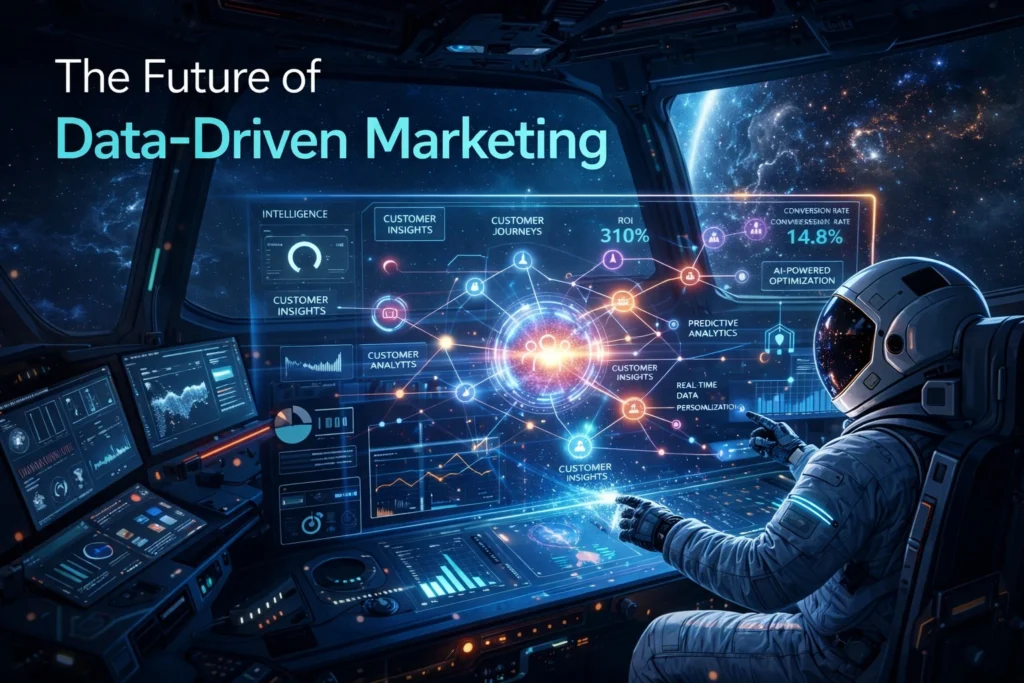
Data has become one of the most valuable assets in modern marketing. Every interaction between a brand and its audience generates insights that can help improve decision-making, optimize campaigns, and strengthen customer relationships.
Data-driven marketing uses these insights to guide strategy, allowing businesses to make informed decisions rather than relying on assumptions or intuition.
As digital ecosystems become increasingly complex, the ability to leverage data effectively is becoming a major competitive advantage.
Modern marketing channels generate enormous amounts of information. Website analytics, social media engagement, advertising platforms, CRM systems, and customer interactions all contribute valuable insights.
When properly analyzed, this data can help businesses:
Understand customer behavior
Identify growth opportunities
Optimize marketing budgets
Improve campaign performance
Organizations that invest in data infrastructure gain a clearer understanding of what drives results.
With growing privacy regulations and the decline of third-party cookies, businesses must increasingly rely on first-party data.
First-party data comes directly from interactions with customers, including:
Website analytics
Email subscriptions
CRM systems
Customer purchases and behavior
Because this data is collected directly from users, it is both more reliable and more compliant with modern privacy standards.
One of the most powerful applications of marketing data is personalization. Consumers are far more likely to engage with brands that deliver relevant and tailored experiences.
Data-driven personalization can include:
Customized website content
Personalized email campaigns
Product recommendations
Targeted advertising
By understanding customer preferences and behavior, businesses can create experiences that feel more relevant and meaningful.
One of the biggest challenges businesses face is connecting data across multiple platforms. Marketing data often exists in separate systems, which can make it difficult to gain a unified view of the customer journey.
Successful organizations integrate data from multiple sources, including:
CRM platforms
Analytics tools
Advertising platforms
Customer support systems
This integrated approach enables businesses to make more strategic decisions and improve overall marketing performance.
Technology alone is not enough to become a data-driven organization. Businesses must also develop a culture that values analysis, experimentation, and continuous improvement.
This involves:
Measuring performance consistently
Testing marketing strategies
Learning from insights and results
Adjusting strategies based on data
Companies that embrace data-driven thinking are better equipped to adapt to changing markets and customer expectations.